Aspen Autumn Colour: Why Leaves Turn Gold and When to See It
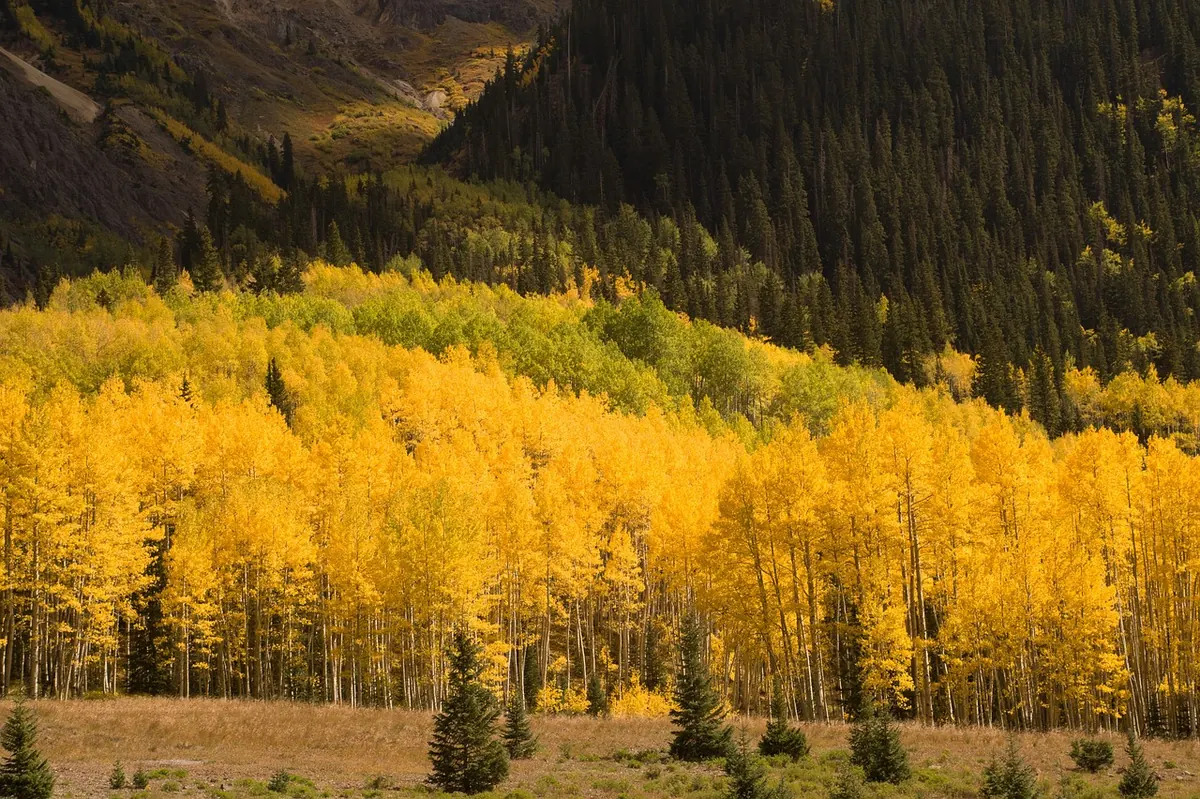
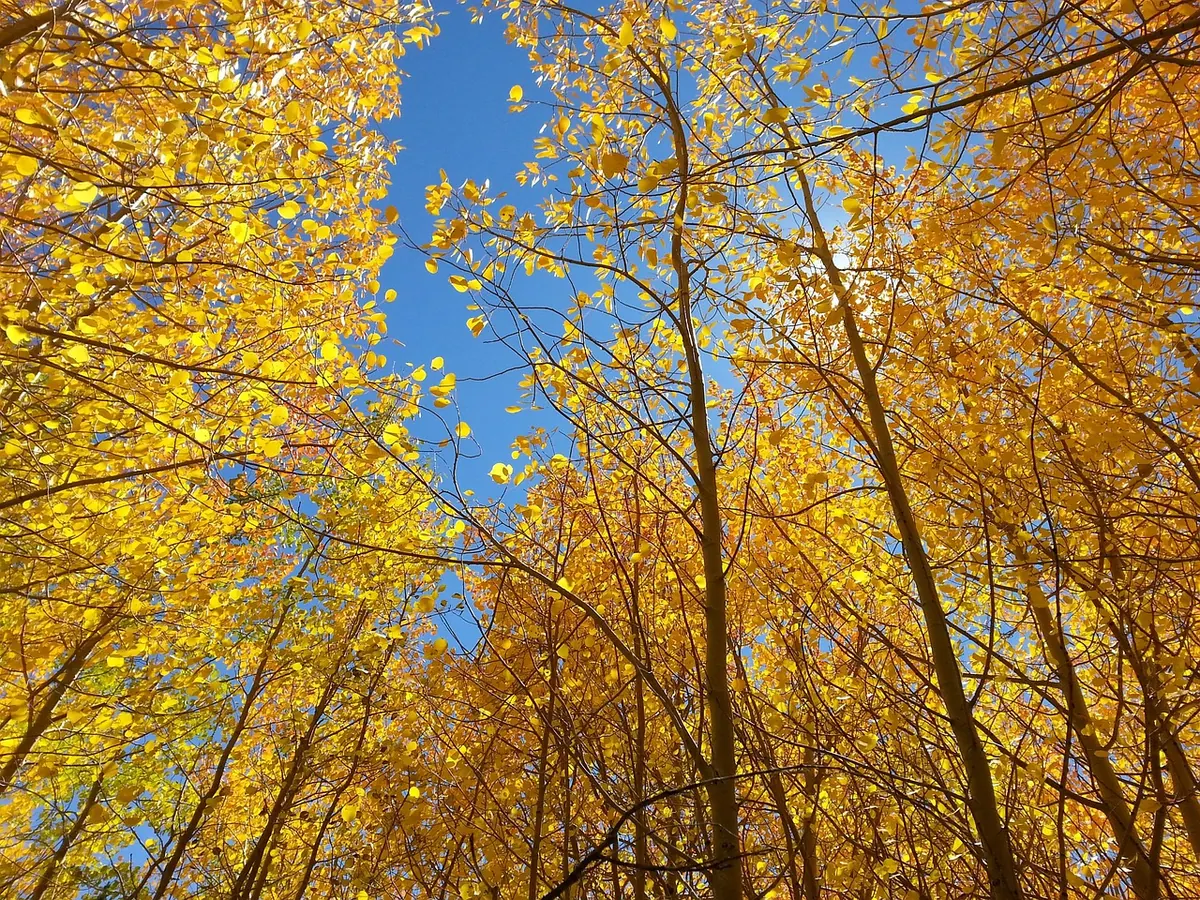
Few sights in a British autumn are as quietly spectacular as an aspen at full colour. For most of the year it sits anonymously among birch and rowan, its grey-green leaves unremarkable. Then, over roughly a fortnight, the whole crown turns a clear, bright gold that seems to hold its own light. Stand beside a group of them on a still October morning and you get two things at once: the colour, and that restless papery rustle that gives the tree its old name, the trembling poplar.
Timing matters more with aspen than with most trees. It colours fast, drops fast, and is patchy across the country. Knowing what drives the change — and when it typically happens where you live — is the difference between catching a golden hillside and arriving to bare branches.
What Actually Happens Inside an Aspen Leaf
Through summer, an aspen leaf is a working factory running on chlorophyll, the green pigment that captures light and drives photosynthesis. Chlorophyll is so dominant that it hides everything else in the leaf.
The pigments that were there all along
As daylight shortens and light levels fall, the tree begins an orderly shutdown. Chlorophyll breaks down, and much of the nitrogen it contains is withdrawn back into the trunk and roots to be stored for next spring. As the green drains away, the yellow and orange carotenoid pigments — which have been present all summer — are finally visible.
Aspen rarely produces much anthocyanin, the pigment responsible for the reds and crimson of maples and some oaks. That is why its autumn display stays firmly in the gold-to-amber range rather than tipping into scarlet. The result is a cleaner, purer yellow than many trees manage.
At the same time, a corky band of cells forms at the base of each leaf stalk — the abscission layer — slowly cutting the leaf off from the tree. Once it is complete, the leaf falls at the next decent gust. Aspen's leaf stalk is long and flattened, which is what makes the blade quiver in even a light breeze. That constant movement matters visually: a trembling canopy chops up the light so a stand of aspen flickers and shifts rather than sitting flat and static.
The Weather That Makes — or Ruins — a Good Year
Shortening days are the main trigger, but weather decides how good the show is. The finest autumns combine bright, sunny days with cool — not freezing — nights. Cool nights slow the breakdown of the yellow pigments, so the gold lingers, and sunshine keeps the leaves producing sugars rather than shutting down early.
What spoils it:
- A hard, early frost. A sharp freeze can brown leaves almost overnight and bring the display to an abrupt end.
- Gales. Once the abscission layer has formed, leaves are held on loosely. A windy spell can strip a tree in a day or two.
- A dry summer. Drought-stressed trees often colour earlier and fade faster.
- Mild, humid autumns. These tend to produce a slower, more gradual change that lacks the same impact.
A light touch of frost, on the other hand, can sharpen the colour for a day or two before it does any harm.
Why Whole Groves Change Together
Aspen spreads readily by suckers, sending up new stems from its roots. That means what looks like a small wood is often a single clone — genetically identical trunks sharing one root system. Stems of the same clone tend to leaf out, colour and drop within days of each other.
The practical effect is striking: you can find a patch of hillside that turns gold as one, while the birch and rowan around it are still green. In the UK, aspen is most at home in Scotland, with good populations in the Cairngorms, Strathspey, Deeside, Lochaber and the western glens, plus scattered trees through northern England, Wales and into southern England. It rarely forms pure woodland, so plan around individual trees and small groups rather than expecting a whole forest.
A Month-by-Month Guide for the UK
These timings are typical, not fixed. Elevation shifts them: higher ground can run a week or more ahead of nearby lowland, and a mild autumn can push everything back.
- Late September. The first hints appear in the far north and on high ground — pale yellow creeping into the outer canopy in the Cairngorms, Lochaber and the Highland glens.
- Early to mid October. The heart of the season across Scotland and northern England. Strathspey, Deeside, Glen Affric, the Lake District and Northumberland are usually at their best now.
- Mid to late October. Peak shifts south into Wales, the Pennines, the Marches and southern England, where aspen grows in woods, hedgerows and along old boundaries.
- Early to mid November. The tail end. Look in sheltered lowland sites and mild coastal areas, where a few trees hold colour after the rest are bare.
- Late November. Mostly over. Attention turns to the golden leaf litter and the pale, lichened trunks.
How to Judge a Good Viewing Day
Colour is only half the equation; light and air do the rest.
Backlit is best
Aspen gold comes alive when the sun is behind the leaves. Aim for early morning or late afternoon, when the sun sits low and light comes through the canopy rather than over your shoulder. Midday sun on a clear day can look harsh and bleached; flat grey cloud mutes the yellow into something closer to beige.
Wind is the other factor. Check the forecast the night before. A calm morning after a cool night is close to ideal — dew on the leaves, no movement stripping them, and blue sky behind the canopy. Take binoculars and look up as well as around; the finest views are often overhead against the sky.
Planning a Trip That Pays Off
Aspen is not a tree you stumble across in every wood, so a little preparation goes a long way.
- Learn the tree first. Look for smooth, pale grey-green bark marked with diamond-shaped lenticels and dark, eye-shaped scars where old branches have dropped. The leaves are almost round with wavy, toothed edges.
- Ask locally. Estate rangers, wildlife trust staff and local recorders usually know exactly where the best stands are. Aspen groups are often well known in an area and rarely marked on maps.
- Check the ground before you commit. If you are travelling far, ring ahead or look at recent photographs from the area — colour can vary by a week or more between neighbouring glens.
- Go early in the day. Light is better, paths are quieter, and you have time to move on if one site has already dropped.
- Look down as well as up. Fallen aspen leaves make a dense golden carpet, and the pale trunks show up well against it.
- Leave the tree as you found it. Take photographs, not branches. Aspen is scarce in parts of the UK and its clonal groups are slow to replace.
Autumn colour is a moving target, and aspen is one of the fastest movers of all. Pick your window, choose a still, bright morning, and the reward is a tree that seems to burn with light for a fortnight and then be gone.
Photo: KBOutdoors / Pixabay
Aspen Leaf Miner and Other Common Pests: A UK Troubleshooting Guide
How to read the damage on aspen leaves and bark, from serpentine leaf-miner trails to gall mites and rust,...
Designing with Aspen: Landscaping Ideas for Small and Large UK Gardens
From flutter-leafed specimen trees to coppiced multi-stem features, here's how to use native aspen in UK...
About Us