Aspen vs Birch: How to Tell Them Apart in Every Season
Stand in a Highland glen or a damp corner of a Welsh valley and you may find aspen and birch growing within a stone's throw of each other. Both have pale trunks, both carry catkins before the leaves open, and both quiver in the wind — enough shared ground to make a quick identification feel uncertain. The differences are there, though, and they show up all year round. Learn five features and you can name either tree in January as confidently as in July.
Winter: read the bark, then the buds
Winter is where most people come unstuck, because the leaves that normally settle the argument have gone. Start with the trunk. Silver birch is the whitest of our common trees: chalky bark peeling in thin horizontal ribbons, marked with bold black diamond-shaped patches where the bark splits. Downy birch, its close relative and the tree of wetter, peaty ground, is duller — grey-white, less papery, rarely peeling in long strips — and its young twigs are softly hairy rather than carrying small warty glands.
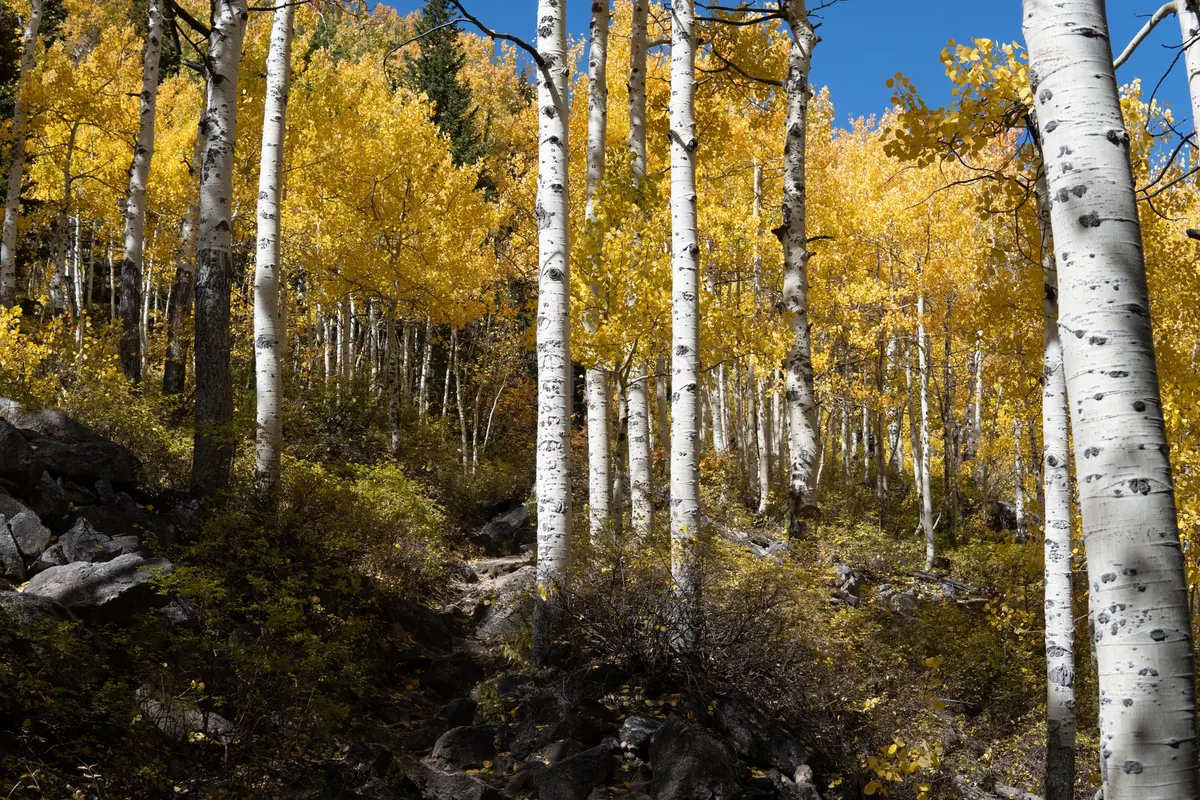
Aspen bark is a different colour altogether: smooth, pale grey-green, often with a faint film of algae that keeps it looking slightly dull even in bright light. Look for soft horizontal bands running round the trunk and small diamond-shaped pores scattered between them. Old aspens change character, developing dark, cracked, heavily ridged bark on the lower trunk while the upper stem stays smooth — a two-tone effect birch never shows.
Then the buds. Aspen buds are brown, glossy, sharply pointed and slightly sticky, sitting tight against the twig. Birch buds are smaller, narrower and greener, and the twigs that carry them are thin enough to flex between finger and thumb.
Early spring: catkins tell you which is which
Both trees flower before the leaves open, and both use catkins, so this is where the two can look genuinely similar. The arrangement of the sexes separates them neatly.
Birch is monoecious: male and female catkins grow on the same tree. The male catkins hang on the twigs all winter, short and stiff and yellow-brown, then lengthen and soften through March and April until they dangle and shed pollen. Female catkins sit upright on the same branches, shorter and green, and later break up into tiny winged seeds.
Aspen is dioecious: any one tree is male or female. Male catkins are thick, grey and woolly, like fat caterpillars, appearing in March before the leaves. Female catkins are green and less showy, and after pollination they release seeds wrapped in white cotton that drifts through the wood in early summer like willow down. If you see cottony seed fluff in June, you are not looking at a birch.
Late spring and summer: the leaf, and the leaf stalk
Aspen leaves are rounded — nearly circular, sometimes slightly heart-shaped at the base — with a wavy, scalloped edge rather than a finely toothed one. They are grey-green above, paler beneath, usually 4–8cm across. The stalk is the giveaway: long, thin and flattened along its length, attached near the centre of the blade. That flat stalk acts like a hinge, so the leaf twists and flutters in the faintest breeze, giving the tree its old name, the trembling poplar. You often hear aspen before you see it — a dry, papery rustle running through the crown while neighbouring trees stand still.
Birch leaves are triangular or diamond-shaped, with a pointed tip and a doubly toothed margin: small teeth set on larger teeth. The stalk is short and round, so the leaf holds its position. On silver birch the outer twigs hang down and the leaves droop with them, giving the crown a fine, weeping texture that aspen never has.
One further check: if the leaves have white, felted undersides, you are looking at white poplar rather than aspen. The two are related and often confused.
Autumn: colour, and how the tree lets go
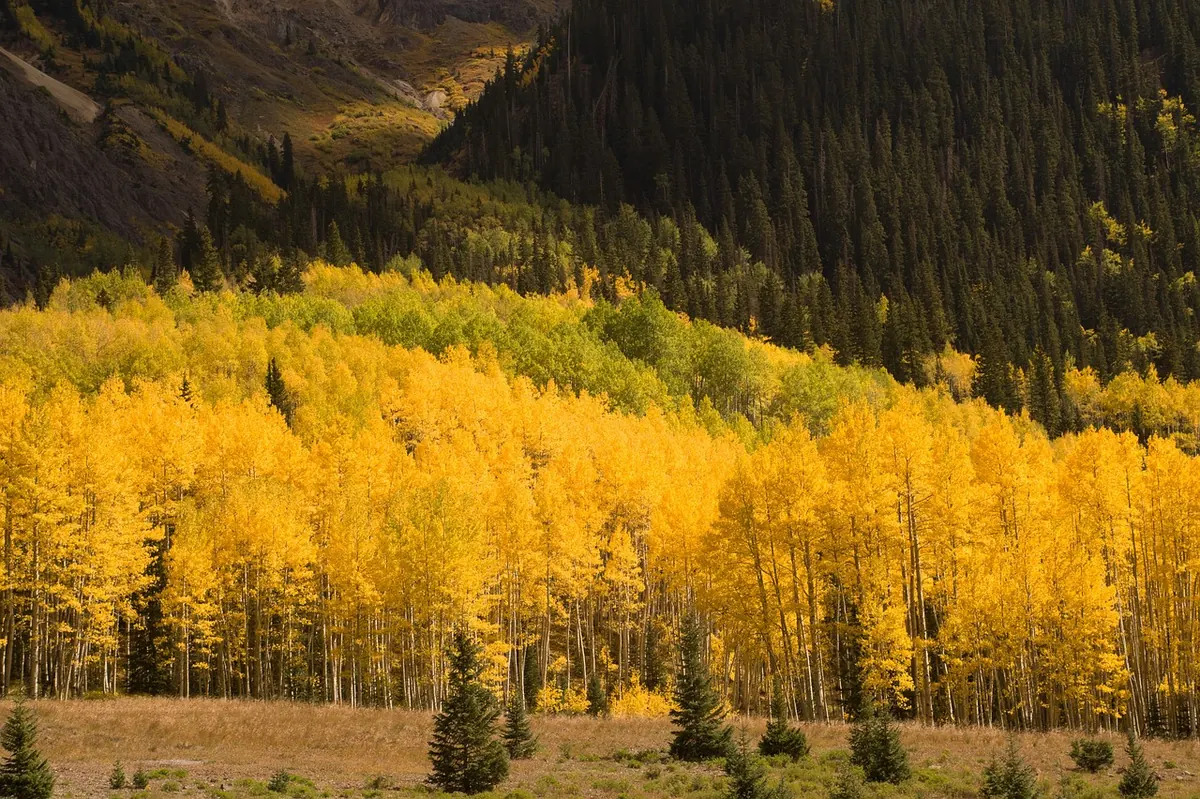
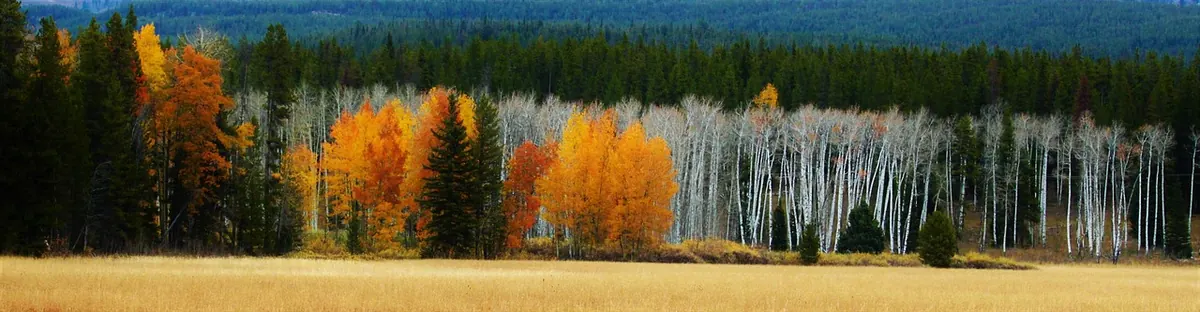
Aspen turns a clear, strong yellow, occasionally warming to orange at the edges, and it does so in unison. Aspens spread by suckers, so a group of trunks is usually one organism — a single clone on one root system — and every stem in that clone colours and drops at the same moment. The result is a solid block of gold in an otherwise green wood, which is one of the easiest ways to spot aspen from a distance in October.
Birch also turns yellow, but paler and more variable: buttery, sometimes washed with orange on sandy soils, and often patchy across a stand, with one tree bare while its neighbour still holds colour. Birch leaves are small and light and blow away quickly, so a birch wood can look thin and open by early November while aspens nearby are still holding theirs.
The setting: two different ideas of home
Aspen likes damp ground: stream sides, woodland edges, wet hollows, upland glens. It suckers freely, so you often find a loose colony of slender stems rather than one big tree, with small shoots pushing up through the grass well away from the parent trunk. In the Highlands, aspen frequently survives as small, isolated stands among oak, ash, rowan and willow.
Birch is the pioneer. It takes open, acidic ground — heathland, moorland edges, cleared plantations, gravel tracks and railway banks — and it gets there first, usually alongside rowan, willow and pine. Stands of birch tend to look even-aged, as though they arrived together after a fire or a felling, because they did.
A ten-second field test
If you are standing in front of one tree and want an answer quickly, work through this:
- Bark: peeling papery ribbons with bold black diamonds — birch. Smooth grey-green with faint horizontal bands, dark and ridged only at the base on old trees — aspen.
- Leaf: round with a wavy edge, rustling audibly in a light breeze — aspen. Triangular with a pointed tip and teeth on teeth — birch.
- Stalk: long and flattened, letting the blade swing — aspen. Short and round — birch.
- Catkins: long, dangling and already visible in midwinter, both sexes on the same tree — birch. Grey, woolly and caterpillar-like in early spring, male and female on separate trees — aspen.
- Ground: suckers rising through grass around a slender parent trunk — almost always aspen.
Getting your eye in
Pick one tree you pass regularly — on a commute, a dog walk, the edge of a park — and visit it once a month for a year. Note the bark in January, the catkins in March, the leaf stalk in June, the colour in October. It takes four or five visits before the features stop being a checklist and start being recognition.
If you only get one glance, go by sound and situation: a rustling crown on damp ground, with suckers in the grass, is aspen. A white trunk on dry, open ground, with fine twigs trailing downwards, is birch.
Photo: sledgirlmt / Pixabay
Aspen Leaf Miner and Other Common Pests: A UK Troubleshooting Guide
How to read the damage on aspen leaves and bark, from serpentine leaf-miner trails to gall mites and rust,...
Designing with Aspen: Landscaping Ideas for Small and Large UK Gardens
From flutter-leafed specimen trees to coppiced multi-stem features, here's how to use native aspen in UK...
About Us